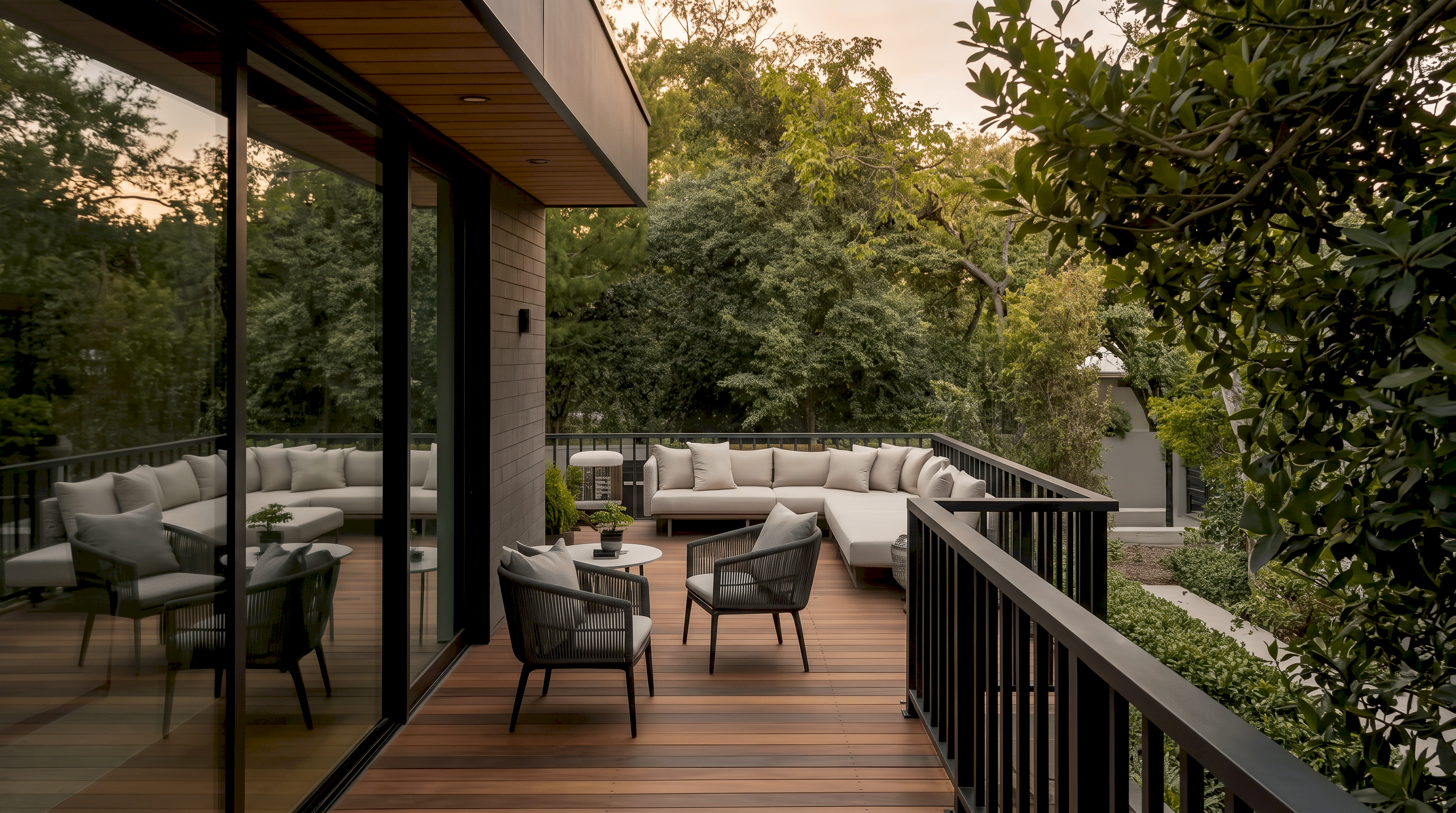
2025 Decking Color & Board-Width Trends (Wide Boards, Herringbone, Chevron)
Outdoor living keeps evolving, and 2025 brings a clean, confident look to decks: wider boards for fewer seams, pattern-forward layouts like herringbone and chevron, and grounded, nature-inspired colors with bold, dark accents. Below is a practical, builder-friendly guide to what’s in—and how to use these ideas on your next project.
What’s New (and Why It Matters)
Wider Boards Step Into The Spotlight
Designers and homeowners are embracing deck boards wider than the long-standard ~5½-inch profile. The appeal is simple: a more seamless surface, fewer lines, and a modern, uncluttered feel that suits today’s architecture. Publications tracking outdoor trends highlight wide-width decking as a defining look for 2025, especially when the goal is a calm, contemporary vibe with minimal seams.
Patterns Move Center Stage: Herringbone & Chevron
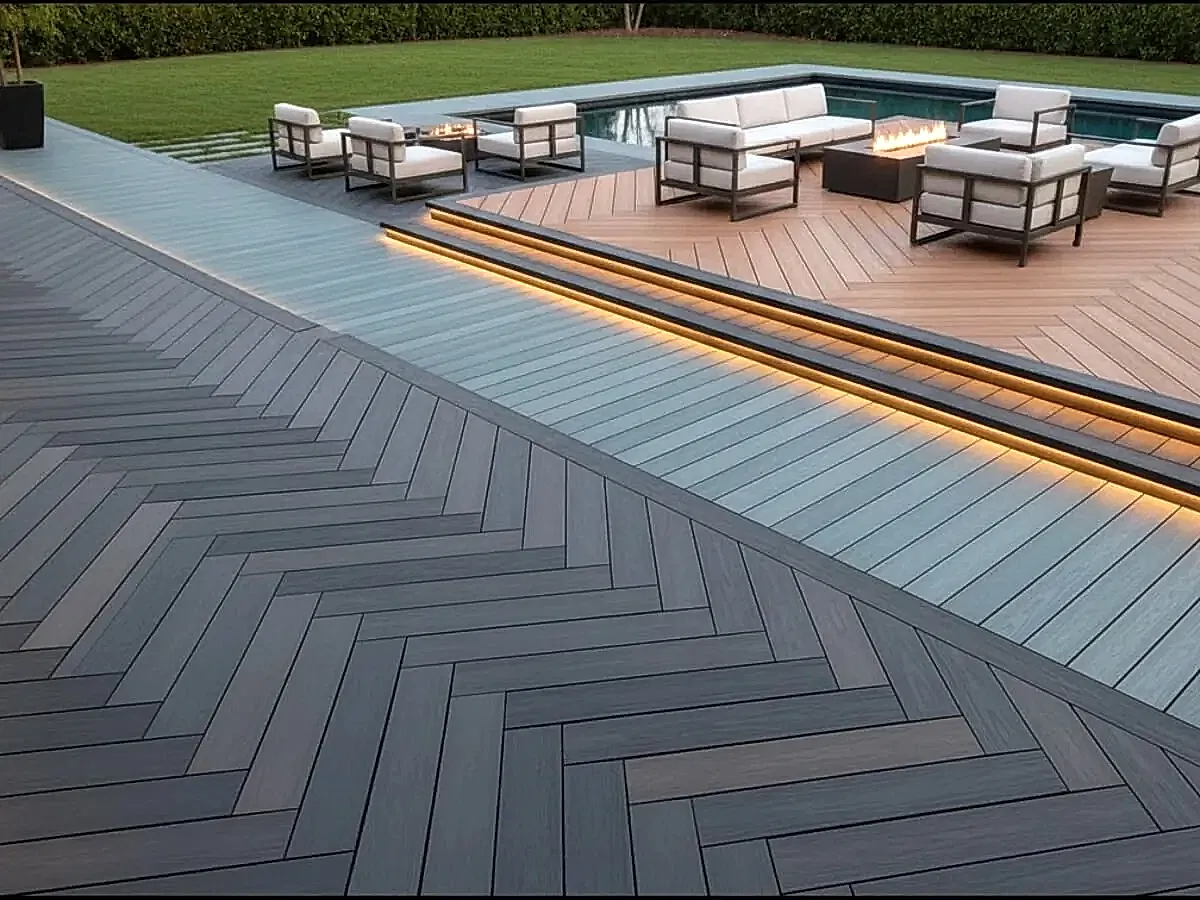
Pattern isn’t just for floors inside the home anymore. Diagonal layouts, herringbone, and chevron deliver instant sophistication, visual motion, and zone definition on a deck. These classic motifs are showing up in 2025 trend roundups and best-practice guides as standout ways to elevate a straightforward rectangle into a custom-feeling space.
Nature-driven Colors With Confident Darks
Palettes are drifting warmer and more organic—think rich browns, modern earth tones, soft driftwood grays—often anchored by inky borders or rail accents to frame the scene. Current exterior and stain color picks emphasize these grounded hues for 2025.
Color Directions You’ll See Everywhere
Earthy Neutrals & Modern Organics
Expect browns, clay-inspired shades, sage-leaning greens, and “greige” that nods to natural materials. These tones connect the deck to the surrounding landscape and pair well with stone, stucco, or wood siding. 2025 exterior palettes and stain spotlights repeatedly point to these nature-matching hues.
Statement Darks For Structure And Contrast
Charcoal, near-black, and deep espresso tones are trending as border or frame colors (and sometimes as the field) to create a crisp outline and help hide scuffs and dirt in high-traffic zones. Recent color features call out rich browns and charred-wood-inspired shades as versatile, year-round options.
Soft Driftwood And Coastal Grays
Cool grays remain popular where a lighter, beach-y look fits the home. Combine with darker borders for depth, or keep everything low-contrast for a serene feel. Industry roundups of 2025 deck and exterior colors still show strong interest in these weathered looks.
Two-tone Picture Framing
Using a contrasting border around the deck field (and sometimes on stair treads) sharpens edges, reduces visual clutter at perimeters, and spotlights transitions. Guides to deck layouts consistently recommend picture framing for polish and long-term wear.
Board-Width Choices, Explained
Standard Vs. Wide: What’s Available
The classic “5/4 × 6” profile remains common, but 7¼-inch composite and PVC boards are widely available, and multi-width collections (narrow, standard, wide) make it easy to mix sizes for rhythm and texture.
When To Choose Wide Boards
- You want fewer seams and a modern, slab-like look.
- The deck footprint is large and benefits from broad visual “planks.”
- You’re aiming for faster coverage with fewer boards and less visual busyness. Recent trend pieces and supplier guidance highlight these advantages for 2025 projects.
When To Mix Widths
- Combine narrow and wide courses to create gentle striping without color changes.
- Use a different width to outline zones (dining vs. lounge) or transition between spaces. Pattern sections in reputable planning resources suggest alternating widths for subtle drama.
Visual Tricks For Small Decks
- Run boards on a diagonal or use a chevron field to draw the eye outward.
- Limit color shifts; use a single border for crisp definition without chopping the surface. Popular layout guides show how diagonal motion enlarges perceived space.
Budget & Install Footprint
- Fewer boards can mean fewer fasteners and quicker coverage, but complex patterns need more planning time and blocking. Wide-board resources frequently note the installation-speed benefit, while pattern guides stress framing details.
Railings That Suit The Look
- Slim, low-visual-weight options—like minimalist black cable—reinforce the seamless theme and keep views open. 2025 railing trend roundups call out this pairing repeatedly.
Pattern Smarts: Herringbone & Chevron Without Headaches
Framing And Support Basics
Herringbone and chevron are diagonal by nature. Most composite/PVC systems require tighter joist spacing for diagonal installs (commonly 12″ on center) versus straight runs (often 16″ on center). Always verify your specific material’s instructions and local code. Authoritative framing references and how-to resources reinforce these spacing rules for angled patterns.
Blocking At Seams
- Add blocking wherever board ends meet and at direction changes so fasteners have a solid bite and edges stay flat. Many layout guides emphasize extra blocking for picture frames and pattern seams.
Centerline Planning
- Snap a centerline and mirror the pattern left/right to keep herringbone or chevron symmetrical, especially on longer runs. Detailed pattern walk-throughs stress alignment to avoid creeping gaps.
Expansion, Gaps, And Drainage
- Follow manufacturer gap charts for temperature and board type; ensure water sheds off the pattern and doesn’t trap at miters. Framing references note spacing adjustments for performance and longevity.
Picture-frame The Edges
- A border board “catches” diagonal cuts, protects end grain/caps, and creates a clean, durable perimeter—especially useful with herringbone or chevron centers. Pattern and idea libraries consistently recommend this detail.
How to Put the Look Together (2025 Playbook)
Step 1: Choose Your Palette
Start with a field color that harmonizes with your home—earthy brown, clay-leaning neutral, or driftwood gray—and decide whether you want a high-contrast border (charcoal/near-black) or a softer, tone-on-tone frame. Current exterior and deck color features point to these combinations as the most versatile this year.
Step 2: Pick The Board Strategy
- Wide-only for calm, modern minimalism.
- Mixed-width to add rhythm without changing colors.
- Standard width if you prefer classic proportions. Availability of 7¼-inch boards and multi-width lines makes any route practical in 2025.
Step 3: Decide On A Pattern
- Herringbone: tightly woven feel and strong symmetry; great as a center panel.
- Chevron: bold directional “V”s that energize long decks.
- Straight with picture frame: refined, clean edge that suits most homes. Pattern roundups and trend pieces showcase all three as top choices for the year.
Step 4: Mind The Structure
Confirm joist spacing for diagonal or patterned installs (often 12″ on center) and plan blocking at every seam, border, and angle shift. This preserves crisp lines and prevents bounce. Reputable technical guides reiterate these spacing guidelines and the need for extra support in pattern builds.
Step 5: Finish With Details
- Borders & stairs: carry the picture-frame color onto stair fascias or treads.
- Railings: slim black cable or similarly minimal options keep the deck feeling open.
- Lighting: warm, low-glare step and post lighting completes the look for evenings. 2025 guides and rail trend features show these touches completing the modern palette.
Real-World Combos You Can Use
Calm Modern
- Field: warm medium brown
- Border: charcoal/near-black
- Board widths: wide-only for a serene slab effect
- Pattern: straight field + picture frame
This option leans into 2025’s grounded browns with confident dark framing for contrast.
Organic Coastal
- Field: driftwood gray
- Border: slightly darker gray to soften edges
- Board widths: mix narrow and standard for subtle striping
- Pattern: single transition board to shift orientation at the lounge vs. the dining
This palette keeps things airy while adding movement through width changes.
Graphic Chevron
- Field: earth-tone mid-brown
- Border: black-toned frame
- Board widths: standard or wide—chevron is the hero
- Pattern: chevron center panel with picture-framed perimeter
A dynamic, directional field that feels custom and current.
FAQs (Quick Builder Notes)
Are Wider Boards Harder To Install?
Not necessarily. You’ll place fewer boards and fasteners overall, which can speed coverage. Precision still matters—keep lines straight and maintain recommended gaps—especially on large, sunny spans. Industry commentary often notes the install-speed advantage of wider profiles.
Do Patterns Cost More?
Patterns need extra framing (blocking) and time for layout and cuts. The material difference is modest; labor/complexity is the bigger factor. Planning resources stress framing for borders and direction changes.
What About Maintenance And Longevity?
Composite and PVC options offer strong color hold, weather resistance, and minimal upkeep compared with traditional wood. That makes them a great match for dark borders and multi-tone designs. Recent explainers continue to highlight these advantages.
Make 2025’s Best Ideas Work—With Intercrus Decks
Ready to turn these trends into an outdoor space that looks sharp, feels welcoming, and lasts? Intercrus Decks can plan the palette, lay out the pattern, and engineer the framing details that make wide boards, herringbone, or chevron perform beautifully. From color selection and picture-frame borders to joist spacing and blocking, you’ll get a smooth, durable deck that matches your home and lifestyle. Tell us the look you want—calm and minimal, organic coastal, or graphic and bold—and Intercrus Decks will bring it to life with clean lines, reliable structure, and smart finishing touches.