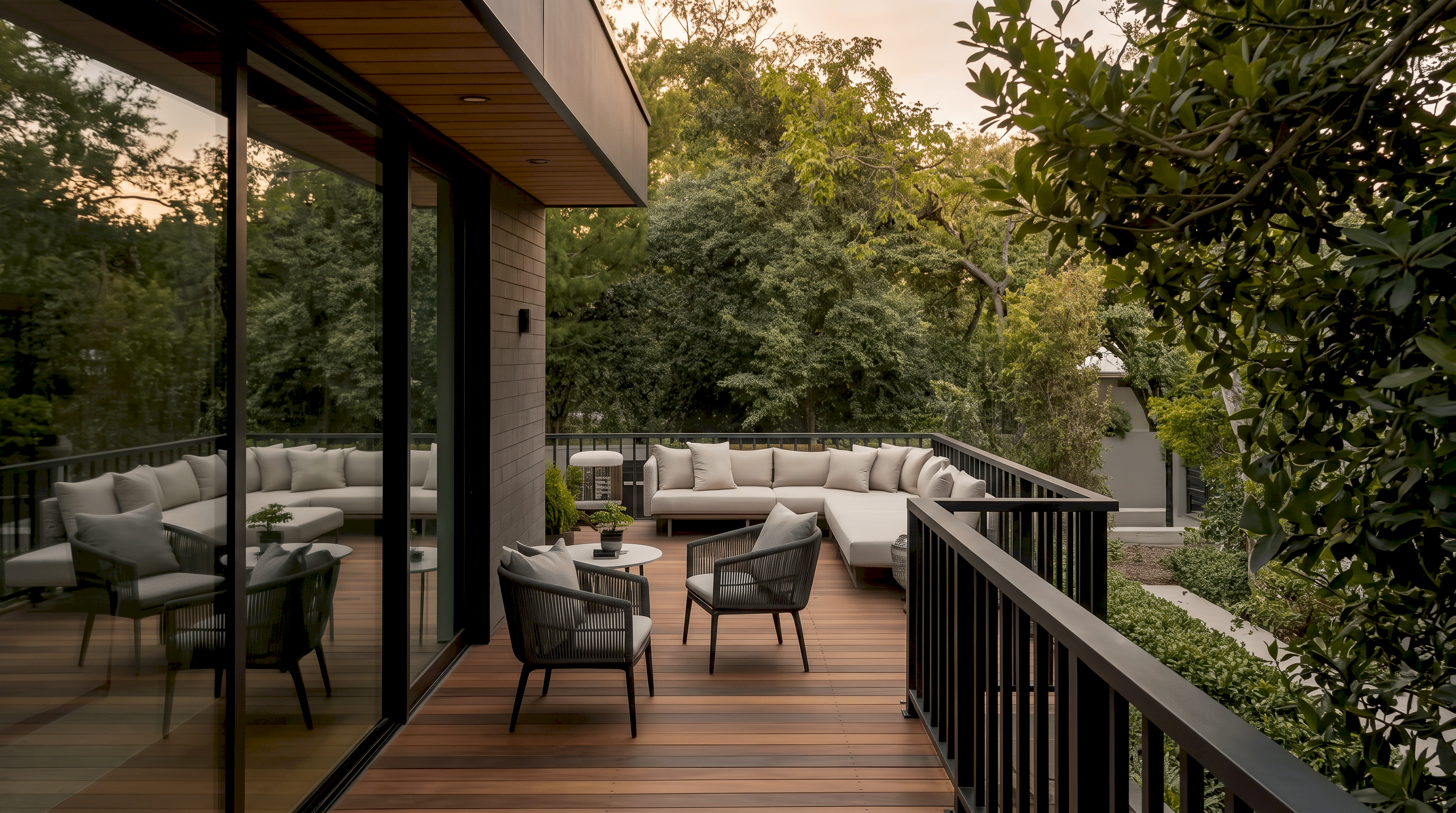
Best Privacy Screen Ideas for a Modern Patio Space
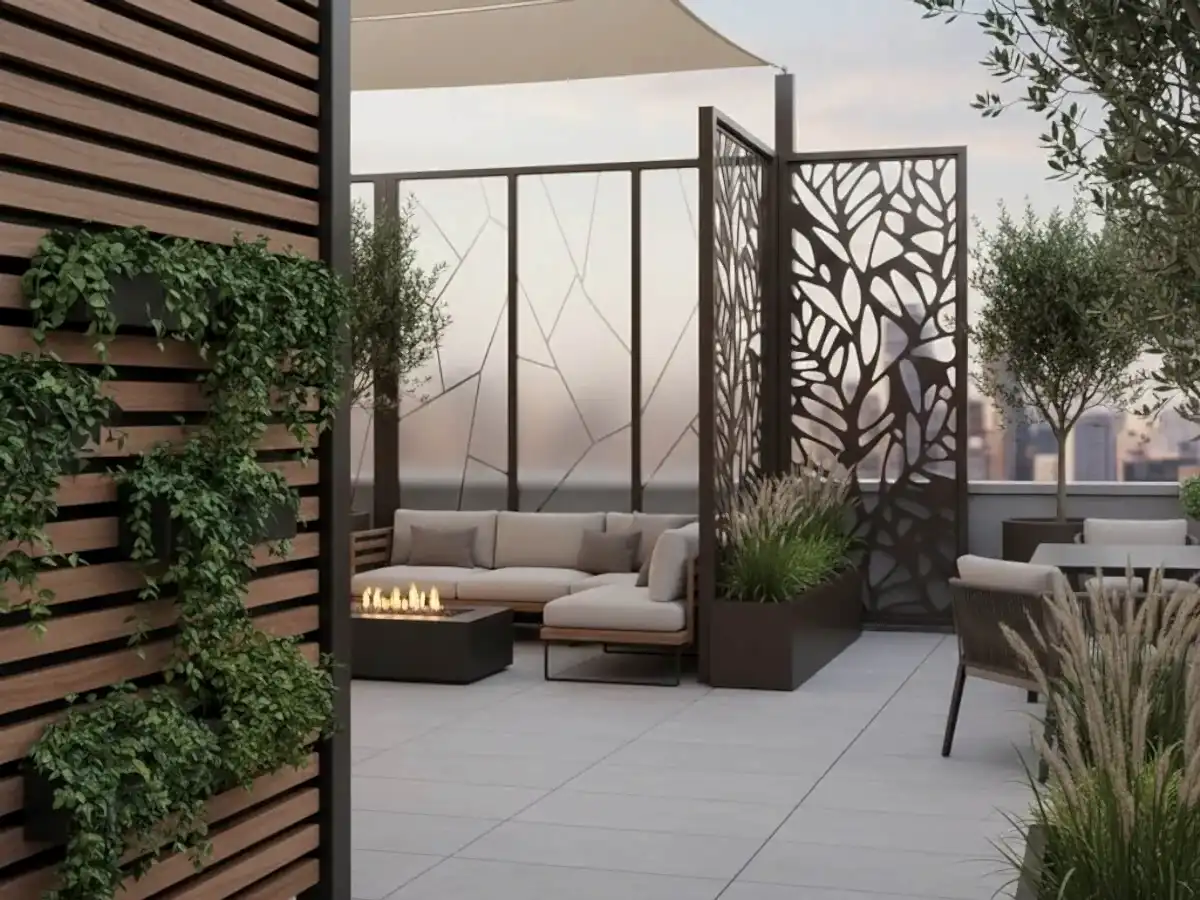
What Makes a Great Patio Privacy Screen
A modern privacy screen should block views without making the space feel boxed in. Aim for designs that protect sightlines while letting in light and air so the patio stays bright and comfortable. Louvers, slender slats, and patterned panels all help you strike that balance.
Light, Airflow, and Sightlines
Angled or louvered boards deflect views while channeling breezes—ideal when you want seclusion without a stuffy corner. Horizontal or vertical slatted walls can do the same if you keep consistent gaps between boards. Using simple spacers during installation helps lock in even, repeatable spacing for a clean look and predictable privacy.
The “Goldilocks” Gap
Too-tight gaps make a wall feel heavy; too-wide gaps sacrifice privacy. DIY guides often demonstrate half-inch to three-quarter-inch repeat spacing to preserve both privacy and ventilation—useful benchmarks when testing mockups on your site.
Modern Materials and Styles
Slatted Wood Walls
Slim cedar or hardwood slats mounted to a simple frame create a timeless, linear screen. Run the slats horizontally for a crisp, modern line, or vertically to emphasize height in compact patios. Pre-drill dense hardwoods and use corrosion-resistant fasteners for a long-lasting installation with flush screw heads.
Horizontal vs. Vertical
Horizontal reads wider and pairs well with long benches and planters; vertical reads taller and visually stretches a short wall. Either way, repeatable spacing keeps the wall looking orderly rather than busy.
Louvered Screens
Louvers tilt sightlines upward or downward, obscuring direct views without killing airflow. They are great along dining areas or near spas where you want to feel enclosed but not cut off from breezes. Building methods typically fasten boards between top and bottom caps with consistent angles for uniform shadow lines.
Decorative Composite Panels
Laser-cut or router-cut composite panels deliver patterns that break up views and cast beautiful shadows. When mounting patterned panels in frames, oversized screw holes at regular intervals let the material expand and contract with the weather—preventing buckling and preserving crisp alignment.
Framed Panel Tips
Add top, middle, and bottom rails so each panel is fully supported. Keep the lowest edge off the ground to reduce splashback and grime, and use exterior-rated fasteners throughout.
Frosted or Textured Glass
Opaque or textured glass provides privacy while still transmitting generous daylight, so your patio feels bright even along a property line. It’s a smart choice beside doors or seating zones that benefit from soft, diffuse light with zero glare. Pair glass with wood or metal posts for a refined, minimal look.
Living Screens That Grow With You
Trellis + Climbers
A slim trellis with climbing vines forms a green backdrop that filters views and softens hard edges. Consistent slat spacing keeps plants trained and creates predictable gaps as foliage fills in. Stainless or wood trellis kits mount cleanly to walls or freestanding posts, offering durable anchor points for plant ties.
Evergreen Coverage vs. Seasonal Interest
If you want year-round coverage, choose evergreen climbers; if you prefer changing textures and blooms, go with seasonal vines and interplant with grasses for winter structure. A mixed planting gives layered privacy across the seasons.
Planter-Backed Privacy
Combine a slatted screen with a deep planter at its base. The planter stabilizes the structure, adds weight where you need it, and creates an instant “green wall” when filled with tall grasses or shrubs. Modular planters let you extend a screen in segments around corners or to create cozy alcoves.
Pots, Trees, and Tall Grasses
Group tall containers with clustered plantings to build movable sightline control. Large pots with sturdy species can handle sun and wind on exposed terraces, giving privacy that still feels alive and welcoming.
Smart Layout Ideas for Any Patio
Layered Heights
Combine a 6–7-foot primary screen with a secondary, lower element—like a backless bench, planter row, or short lattice. This layered strategy blocks seated views while preserving openness above head height.
L-Shaped Corners
An L-shaped screen at one corner instantly creates a lounge nook without enclosing the entire perimeter. Add a trellis roof beam or string lights to suggest a “ceiling” and enhance intimacy.
Alternating Solid and Open Bays
Alternate solid bays (for privacy where neighbors look in) with open or patterned bays (where you want light and airflow). Around pools or spas, paired trellises and arbors can create privacy while keeping movement fluid.
Screen + Seating Combos
Build a bench directly into the base of a screen to save space and prevent chair backs from scuffing the wall. A built-in seat also adds mass to resist wind.
Build It Right: Practical Details That Matter
Structure and Anchoring
Freestanding screens act like sails. Anchor posts to footings or heavy planters and tie tall spans back to overhead framing where possible. Use exterior-rated screws, pre-drill dense species, and check that posts are plumb before fastening slats for consistent lines.
Water and Weather
Where you add shade sails or fabric elements, pitch the surface and introduce a subtle “ridge” so water doesn’t pond. Even a small low spot can collect surprising weight during a storm. Adequate tension and drainage extend the life of fabrics and hardware.
Finishes and Upkeep
Choose finishes that protect against moisture and UV. For screens near planters or sprinkler overspray, elevate wood off paving with small feet or brackets. Periodically check fasteners, re-oil hardwoods as needed, and trim plants to keep airflow and sightlines working as designed.
Quick, Temporary, and Modular Solutions
Folding Utility Screens
Lightweight folding panels hide grills, bins, or AC units and can double as ad-hoc privacy near dining areas. A simple wood frame with mitered corners is easy to build, move, and store between seasons.
Seasonal Shade Sails
If you need privacy only at certain times, fabric sails or tarped sections create an instant scrim that blocks views from above decks or windows next door. The key is secure anchor points, correct tension, and a subtle slope for water shedding.
How to Choose the Right Idea for Your Patio
- Map Sightlines: Sit where you relax and note exactly where prying views originate. Block those lines first with a screen bay, plant grouping, or trellis.
- Test With Mockups: Use two posts and a few temporary boards to test heights and gaps. Adjust until you get the privacy you want without losing light.
- Blend Elements: Combine a slatted wall for core protection with a patterned panel or trellis for texture and layered depth.
- Think Maintenance: If you love low-care spaces, prioritize durable composites or hardwoods; if you enjoy gardening, living screens can be rewarding.
- Plan for Wind: Break up long, solid spans with reveals or patterns so gusts pass through. Anchor carefully and keep the weight low.
Bring Your Vision to Life with Intercrus Decks
Ready to turn these ideas into a screen that looks clean, works hard, and ages gracefully? Intercrus Decks can plan, build, and install slatted walls, louvered assemblies, framed patterned panels, and plant-forward trellis systems that match your space and lifestyle. We handle structure, anchoring, drainage, and finishing details, and we integrate planters, seating, and lighting so your patio feels like a true outdoor room. Share your goals and a few photos, and our deck builders will create a clear, step-by-step path from concept to completed privacy—so you can relax outside with comfort and confidence.