Deck Lighting for Safety & Mood: Low-Voltage, Solar, and Smart Controls
A well-lit deck is more than a nice touch. Good lighting helps people move safely at night, reduces trip hazards, and creates a relaxing mood for evening time outside. Today, lighting is not just a porch light over the door. You can light steps, railings, posts, and even the floor. You can also control brightness and color from your phone. This blog explains how deck lighting works, why it matters, and how options like low-voltage, solar, and smart lighting can transform your outdoor space.
Why Deck Lighting Matters
Lighting Improves Safety
Outdoor steps, edges, and uneven surfaces become hard to see once the sun goes down. When the deck is dark, one missed step can lead to a fall. Soft, focused lighting along stairs, railings, and walkways helps guide every footstep.
You are not trying to make the deck extremely bright. You just want clear visual markers. Step lights, post cap lights, and under-rail lighting help people understand where to walk and where not to walk. This is especially important for kids, older adults, and guests who are not familiar with the layout.
Lighting Sets the Mood
Deck lighting also affects how a space feels. Warm, low-level light helps the deck feel calm and private. Brighter, cooler light feels more open and social. In other words, lighting helps control the “energy” of the deck without changing the structure.
With the right setup, you can highlight textures in the wood, show off plants, and create quiet corners. Good lighting makes even a simple deck feel finished.
Types of Deck Lighting
There are many ways to light an outdoor space. Here are the options most homeowners ask about: low-voltage lighting, solar lighting, and smart lighting.
Low-Voltage Deck Lighting
Low-voltage lighting runs on a transformer that reduces standard household voltage (usually down to 12 volts). It’s a popular choice for long-term, permanent deck lighting.
How Low-Voltage Lighting Works
A main transformer plugs into a standard outlet. That transformer feeds power through outdoor-rated wiring to each light. Because the voltage is lower, the system is safer to work with and more energy efficient than old-style outdoor flood lights.
Most low-voltage systems use LED fixtures. LEDs run cool, last a long time, and use very little power compared to old incandescent bulbs. This helps keep operating cost low.
Best Places to Use Low-Voltage Fixtures
- Stair risers: Small lights on each riser show depth and height.
- Under railings: Light tucked under a handrail gives a clean glow without glare.
- Post caps: A lit post cap marks the edge of the deck and helps define the perimeter.
- Along pathways: Flush, ground-level lights can outline a path from the deck to the yard.
Low-voltage lighting gives consistent brightness all night and all year. It does not rely on weather or sunlight.
Solar Deck Lighting
Solar lighting runs on sunlight. Each fixture has a small panel that charges a built-in battery during the day, then lights up automatically after dark. This is a good option when wiring is hard to reach or when you want fast installation.
Benefits of Solar Lighting
- No wiring or trenching.
- No electric bill for that light.
- Works even in areas where outlets are not available.
Because each light is self-powered, you can place solar lights on rail posts, steps, and around the deck perimeter without running cables.
Things to Know About Solar Lights
- Solar lights need direct sunlight during the day to stay bright at night.
- Output can drop on cloudy days.
- Some low-cost solar caps and pucks may fade or get dull over time.
Solar is great for accent lighting, path marking, and soft mood lighting. If you want a strong, steady light every night, low-voltage may be better.
Smart Control Deck Lighting
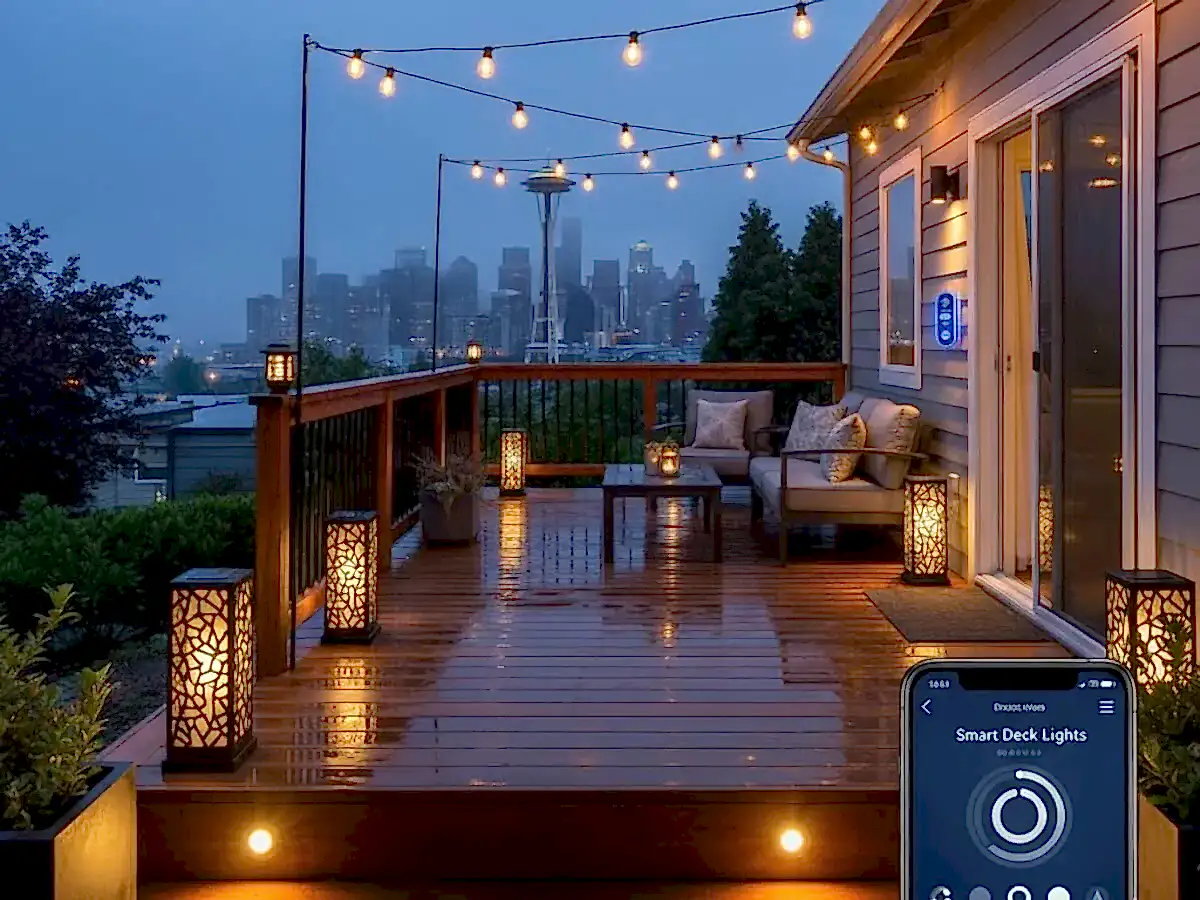
Smart lighting refers to any lighting you can control with an app, remote, or voice hub. Some systems let you dim the lights, change color temperature, or shift to soft colored light for parties.
Smart lighting can be built into a low-voltage system or paired with certain solar fixtures that include wireless control.
Smart Lighting Features
- Dim the lights without flipping a switch.
- Set automatic schedules for evening, late-night, and overnight security levels.
- Change brightness level in different deck zones (for example, brighter at the grill area, softer in the seating area).
Safety Benefits of Smart Controls
A dark deck is not just a comfort issue. It can be a security issue. Timed lighting or motion-triggered lighting can discourage unwanted activity around doors, gates, and back entries. In addition, lights that turn on before you get home make it easier to carry groceries or gear across the deck without tripping.
Planning Your Deck Lighting
Step 1: Map the Traffic Zones
Watch how people actually move across your deck at night:
- Where do people step down?
- Where is the path to the yard?
- Where do guests first place their hands to grab a rail?
These points should get the first light. Safety lighting always comes before “pretty” lighting.
Step 2: Mark Focal Zones
After safety, think comfort:
- Dining table
- Lounge chairs
- Hot tub or fire pit area
- Outdoor kitchen or grill station
These zones benefit from warm, indirect light that lets people see faces, read menus, and handle food without harsh glare.
Step 3: Choose Power Style
Ask yourself:
- Do you want strong, steady lighting all year? → Low-voltage may be the answer.
- Do you want a fast setup with no wiring? → Solar could work.
- Do you want dimmers, timers, or color control? → Smart lighting or a smart transformer is worth it.
Step 4: Avoid Over-Lighting
Too much light can ruin the mood and annoy neighbors. The goal is “clear and calm,” not “stadium brightness.” Aim light downward and inward, not out toward nearby windows.
Maintenance Tips
Clean Lenses and Solar Panels
Dust, pollen, and moisture film can block light output. Wipe lenses and solar panels with a soft cloth now and then. This one simple step will keep the light clear and bright.
Check for Loose Wires and Fasteners
On low-voltage systems, outdoor wire connections should stay tight and protected from standing water. Inspect under rails and along steps to make sure fittings haven’t pulled loose.
Replace Weak Batteries in Solar Fixtures
If a solar light starts getting dim early in the night, the small internal battery may be aging. Many solar caps allow battery replacement. Swapping in a fresh rechargeable cell can bring the brightness back.
Upgrade Your Deck Lighting with Intercrus Decks
Safe lighting and beautiful lighting can be the same thing. Low-voltage systems give strong, reliable step and rail lighting. Solar lights offer quick, wire-free placement. Smart controls let you shape the feel of your deck for quiet evenings or weekend gatherings. When done with care, lighting guides every step, protects guests, and turns a plain deck into an outdoor room you actually use after sunset.
Intercrus Decks can design and install lighting that fits your deck layout, supports safe movement at night, and creates the kind of warm outdoor space people want to sit in, talk in, and enjoy. From planning to installation to long-term upkeep, we focus on practical solutions that look good, last through real weather, and make your evenings outside safer and more comfortable.
FAQs: Deck Lighting for Safety & Mood
Why is low-voltage lighting popular for decks?
Low-voltage lighting is power-efficient, safer to handle than standard voltage, and strong enough to light stairs, railings, and walk paths. It also delivers steady brightness all night without relying on sunlight.
Will solar deck lights work if my deck is shaded?
They will turn on, but they may not stay bright for long. Solar lights charge during the day. If trees or roof lines block sunlight, the battery may not hold enough energy to last through the evening.
Do I really need lighting on every step?
You do not need to light every single step, but lighting each riser or every change in level greatly improves safety. Even small, low-glow fixtures help show depth and prevent missteps.
Can deck lighting be dimmed for mood?
Yes. Many smart and low-voltage systems now include dimmers or app control. You can keep a brighter light for cooking or guests, then lower it for late-night relaxing.
Is deck lighting only about looks?
No. Looks are part of it, but the first goal is safety. Good lighting lowers fall risk, guides people along edges, and keeps entry areas easier to navigate after dark.
How often do I need to maintain outdoor lighting?
Most LED fixtures last a long time, but you should still wipe lenses clean, check wiring or mounting points, and replace weak solar batteries. A quick inspection every few months is usually enough.