Outdoor Kitchens on Decks: Weight, Heat, and Grease Management
An outdoor kitchen on a deck turns normal cookouts into real outdoor living. But a deck is not a concrete patio. A kitchen adds heavy gear, high heat, open flame, and grease. If those are ignored, you can get sagging boards, stains, or even a fire.
Can Your Deck Hold an Outdoor Kitchen?
Structural Load and Weight Concentration
A basic deck is built for people, chairs, and a table. An outdoor kitchen concentrates weight in one zone: grill, cabinets, countertop stone, fridge, maybe a pizza oven. That load never moves. When too much weight sits over a few joists, the frame can flex and the hardware can loosen.
Heavy Islands and Stone Finishes
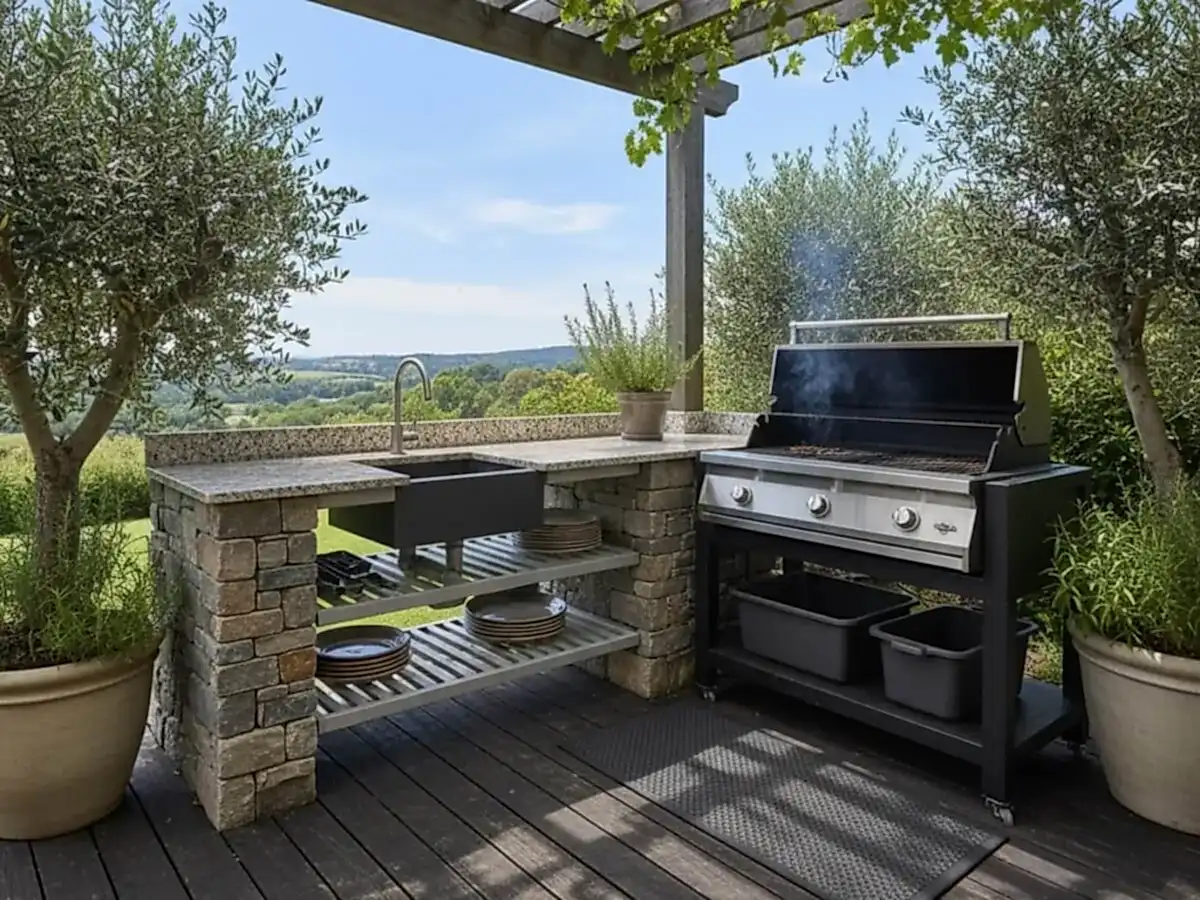
Stone veneer and thick countertops look great, but act like anchors. Before adding them, study the frame under that section. You may need stronger beams, doubled joists, or blocking between joists. In some layouts, the best move is a grill island on new footings beside the deck, tied in at surface level.
Posts, Footings, and Hardware
Stronger joists alone are not enough. Load still travels down to posts and footings. Undersized posts or shallow footings can allow long-term sag. Many outdoor kitchens need added posts and new concrete footings under the cooking zone. Also use exterior-rated structural screws, brackets, and tension hardware built for moisture, stress, and vibration.
Heat Management
Safe Clearance Around Hot Appliances
Grills, smokers, and side burners release constant heat and random flare-ups. Heat should never sit tight against deck boards, rail posts, siding, pergola slats, or lighting wire. Leave open air around lids, vents, and exhaust paths.
Fire-Resistant Surfaces at the Grill Zone
Decking can scorch, melt, or stain under a hot grill. Do not park a grill straight on bare boards. Place a non-combustible layer under and behind the grill. Metal, cement board, or a high-heat grill mat works well. A heat-safe backsplash panel also helps stop a sudden flare-up from licking railings or framing.
Insulated Grill Jackets
Most built-in gas grills are meant to slide into an insulated grill jacket. The jacket shields nearby framing and cabinets from high heat. If you frame the island with wood or composite and skip the jacket, the inside of that box can overheat and char. The jacket is not a decoration. It is protection.
Ventilation and Smoke Flow
Smoke and heat need a way out. Without ventilation, grease vapor bakes nearby walls and ceilings and leaves sticky buildup. On a covered deck, plan for an outdoor-rated hood and duct path. On an open deck, give the grill breathing room.
Grease and Spill Control
Grease Fire Prevention
Grease is fuel. When it pools, it can flash. Keep burner trays, grates, and drip pans clean. Empty catch pans before they overflow. Do not leave foil pans of old grease under the grill for weeks.
Catch Pans and Drip Management
Do not let hot grease hit the deck boards. A small leak can become a permanent stain and a slip hazard after rain. Every grill, griddle, or side burner should have a working drip tray or catch pan. Check it every time you cook.
Protecting Deck Boards
Oil, sauce, and marinade can soak into wood and leave shiny stains on composite. Use a quality, outdoor-rated mat under the cooking area. Thin indoor mats curl, trap water, and stick. If a mat holds moisture against wood, swap it out. Standing moisture speeds rot and can discolor the composite.
Fast Cleanup
Wipe spills once the grill cools. Use cleaners made for your deck surface. Skip harsh pads that grind off protective coating. A quick rinse after big cookouts keeps the deck cleaner, safer, and better looking.
Utility Planning: Gas, Power, and Water
Gas and Propane Safety
Gas and propane raise safety rules. Propane tanks should sit in a vented spot, not in a sealed cabinet that could trap gas. Hard gas lines for natural gas need a shutoff valve you can reach fast. Gas work must follow local code.
Electrical Power
Outdoor kitchens usually need outlets for fridges, pellet grills, lights, and blenders. Exterior outlets should be rated for outdoor use and protected from moisture. Do not run loose extension cords across the walking space. Plan lighting early. You want clear task lighting for nighttime cooking without glare.
Water and Drainage
A sink on the deck sounds great, but water brings extra steps. Supply lines need freeze protection in cold seasons. Drain lines must send water away from joists and beams. Never dump sink water straight onto framing or into soil under the deck. Standing water invites insects, odor, and decay.
Work With Intercrus Decks
A safe deck kitchen comes down to three things: weight, heat, and grease. The frame must hold the load without sag. Hot zones must be spaced and shielded so nothing scorches. Grease and spills must be contained so stains, flare-ups, and slip hazards stay under control. Gas, power, lighting, and water also need smart planning so the space is safe day and night.
Intercrus Decks builds outdoor cooking areas on decks with these factors in mind from the first sketch. We reinforce framing and footings for heavy grills and stone. Our deck builders create protected heat zones with the right clearances, surfaces, and ventilation. We plan grease control, lighting, storage, and cleanup as part of the layout, not later. Reach out to Intercrus Decks when you want an outdoor kitchen on your deck that feels solid, looks clean, and works in daily life.
FAQs About Outdoor Kitchens on Decks
How Do I Know If My Deck Can Hold An Outdoor Kitchen?
You need an in-person look at joists, beams, posts, and footings. Many decks can work with upgrades under the cooking zone.
Will A Grill Ruin Composite Decking?
High heat and grease can stain or mark the composite. A heat-rated mat and a drip tray under the grill protect the surface.
Can I Store A Propane Tank In A Closed Cabinet?
No. A closed box can trap leaking gas. Tanks should sit in a vented space where gas cannot build up.
Do I Need A Vent Hood If My Deck Kitchen Is Open Air?
You still need airflow. Heat and smoke can collect against railings and nearby walls. Good spacing and ventilation prevent hot spots.
Why Choose Intercrus Decks For This Kind Of Project?
Intercrus Decks understands deck structure, outdoor heat zones, grease control, and safe routing for gas, power, and water. We bring it all together so the finished area works.