Railings Compared: Cable, Glass, Aluminum, Wood (Views vs. Privacy)
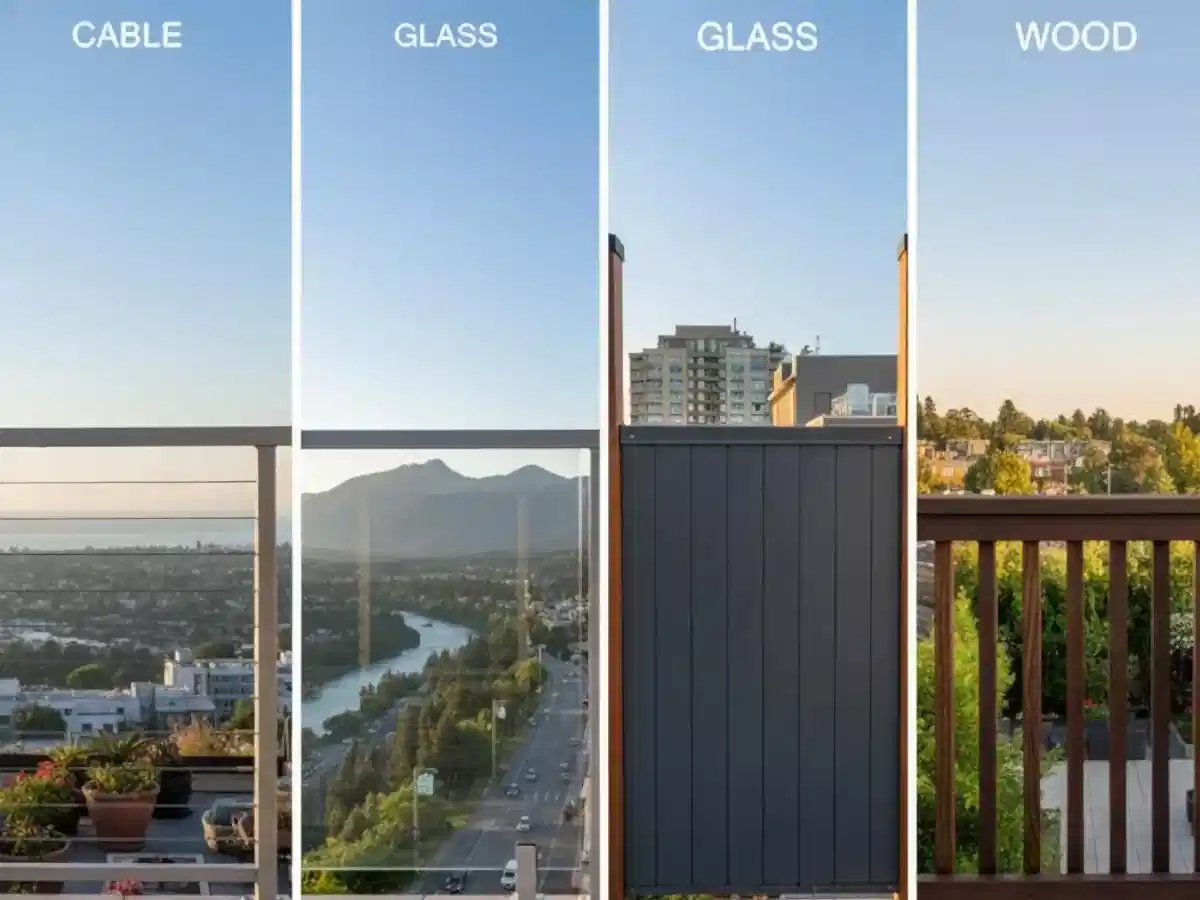
Choosing a deck railing isn’t just about style—it’s about how much of your view you want to preserve and how much privacy you want to gain. Below is a clear, practical comparison of four popular railing types through the lens of views vs. privacy, plus notes on safety, upkeep, and code basics you should know before you build.
First Things First: Safety & Code Basics That Shape Design
Guard Height And When It’s Required
Most homes follow the International Residential Code (IRC). If your deck surface is more than 30 inches above grade, a guard (railing) is required, and the minimum guard height is typically 36 inches in residential settings (local amendments may vary).
The “4-inch Sphere” Rule
Guard infill (the spaces between pickets, cables, or beneath the bottom rail) can’t allow a 4-inch sphere to pass through, with slightly different allowances on stairs. This rule greatly influences cable tension, picket spacing, and glass panel gaps.
Check Local Exceptions
Local jurisdictions can add rules—for example, specific limits on cable rail or stair openings. Always confirm with your local building department before finalizing rail type and spacing.
Cable Railing — Maximum View, Minimal Privacy
What Cable Does Best
Cable railing uses thin horizontal (or vertical) stainless cables that almost disappear at a distance. That means excellent sightlines and airflow, especially on lots with water, forest, or mountain views. It also offers strong, durable performance when properly tensioned and installed, with less ongoing upkeep than many wood systems.
Practical Notes (Tension, Complexity, And Code)
Cables must be tensioned so deflection still meets the 4-inch sphere rule under load. Expect more complex installation and periodic re-tensioning as temperatures change. Some jurisdictions restrict cable rail or require specific details—always verify before you buy. Privacy is inherently low because cable is visually open.
- Views: Outstanding—nearly unobstructed.
- Privacy: Low—neighbors can see through easily.
- Maintenance: Occasional cleaning plus tension checks; less finishing work than wood.
Glass Railing — The Clearest View, With Smart Ways To Add Privacy
Why People Choose Glass
Glass railing delivers unobstructed views while meeting guard requirements. They also block wind, making elevated or open decks more comfortable without walling off the scenery.
Managing Privacy (And Cleaning)
Clear glass offers the least privacy—but you can add frosted or tinted glass to soften visibility while still admitting daylight. Expect routine cleaning for fingerprints, water spots, and pollen, especially in coastal or dusty settings.
- Views: Best in class (clear glass).
- Privacy: Low with clear panels; moderate with frosted/tinted options or a mixed design (privacy panels in key sightlines).
- Maintenance: Regular cleaning; hardware checks, like any guard system.
Aluminum Railing — Balanced Visibility, Strong Privacy Options, Low Upkeep
Strengths That Matter Outdoors
Powder-coated aluminum rails and pickets are lightweight, corrosion-resistant, and low-maintenance. Soap-and-water cleaning usually does the job, and finishes resist weather far better than raw or unprotected metals.
Privacy And Style Range
Standard picket systems offer moderate screening (more than cable, less than solid infill). Many lines include privacy panels or closely spaced pickets to boost seclusion without going full solid-wall. Minor drawbacks include the potential for surface scratches and a look that skews modern on some homes.
- Views: Moderate—vertical pickets interrupt but don’t block.
- Privacy: Moderate; can be increased with panel or screen infills.
- Maintenance: Low—no staining or sealing cycles.
Wood Railing — Warm, Natural, And The Easiest Path To Privacy
Why Wood Still Wins For Seclusion
Wood is incredibly adaptable: wide balusters, solid boards, or lattice panels can create significant privacy. It’s also easy to combine a solid section (toward the neighbor) with a more open section (toward the view).
The Trade-off Is Upkeep
To fight UV, moisture, and decay, wood rails need periodic sealing, staining, or painting. Expect more maintenance than other materials and plan for spot repairs over time.
- Views: Variable—solid styles can block most sightlines.
- Privacy: High potential using boards, lattice, or screening.
- Maintenance: Highest—regular finishing and inspections.
Views Vs. Privacy: Quick Chooser
If Your Lot Lives For The View
Pick glass (clear) or cable for wide-open sightlines. If wind is an issue, glass panels double as a windbreak without closing the space. Consider frosted sections only where privacy is essential.
If Your Neighbors Are Close
Choose wood or aluminum with privacy infill to shield seating areas. A hybrid layout works well: solid or frosted sections facing the neighbor, more open railing where you want to look out.
If Low Maintenance Is The Priority
Aluminum is the easy winner for upkeep, with cable next (tension checks but minimal finishing). Glass needs cleaning; wood needs finishing cycles.
Design Details That Help You Fine-tune Privacy
Mix Infills Strategically
Combine open infill (cable or pickets) toward the view with privacy infill (frosted glass, closer pickets, or wood panels) where you want seclusion—while keeping all openings code-compliant.
Use Height And Placement
A 36-inch residential guard is the minimum in many areas; adding a taller privacy screen or wind wall on one side can protect seating zones without enclosing the whole deck. Always confirm local allowances for screen height and loads.
Keep The Details Code-Safe
Whatever you choose, respect the 4-inch sphere rule across the guard height (stair allowances differ) and verify any local exceptions—especially with cable systems.
Build It Right With Intercrus Decks
Your deck should match how you want to live: glass or cable when the view is the star, wood or aluminum when privacy matters, or a smart hybrid when you want both. Intercrus Decks helps you plan infill types, screen placement, and finishes that fit your space, meet code, and look great for years. If you’d like a design that protects the view while shielding the seating area, or a low-maintenance system that still feels warm and welcoming, Intercrus Decks can make it happen—clean, practical, and built to last.